- DogSpeak: Redefining Dog Training
- Posts
- What Predatory Motor Action Patterns Reveal About Canine Behavior — And How to Work with Them
What Predatory Motor Action Patterns Reveal About Canine Behavior — And How to Work with Them

Nikki Ivey
February 11, 2026

Predatory motor action patterns (PMAPs) are one of the most misunderstood aspects of canine behavior. Too often mislabeled as “aggression,” these instinctive sequences are actually hard-wired movement patterns rooted in a dog’s evolutionary history as a hunter. Understanding PMAPs helps caregivers interpret behaviors with clarity and empathy — and design enrichment that satisfies natural drives safely.
🐾 What Are Predatory Motor Action Patterns?
Predatory motor action patterns are innate, sequential behaviors that originally evolved to help ancestral canids hunt and capture prey. These patterns are composed of predictable phases:
Search/Orient — scanning the environment
Stalk — slow, focused movement toward a target
Chase — rapid pursuit of movement
Grab-Bite — seizing the target
Kill/Shake — holding and shaking
Dissection — tearing apart
Each phase is a motor sequence — meaning it’s a pattern of movement that the nervous system can execute once triggered. These are not emotional responses like fear or anger; they are goal-directed actions backed by neural circuits designed for efficient execution.
Genetic and Neurobiological Foundations
PMAPs are rooted in genetics and neurobiology. While there isn’t a single “prey drive gene,” research into canine genetics and behavior shows that:
1. Genetic Selection Shapes Drive Profiles
Domestic dogs have been bred for working roles that amplify certain PMAP components. For example: READ MORE!
More Than a Wag: Understanding What Dogs Are Communicating
A wagging tail is one of the most commonly misunderstood signals in dog communication. While many people assume a wag automatically means a dog is happy or friendly, tail movement is simply information. Dogs wag their tails when they’re emotionally aroused, and that arousal can come from excitement, uncertainty, stress, frustration, or even conflict. The presence of a wag tells us a dog is feeling something—not what that feeling is.
To understand what a dog is communicating, we have to look beyond the tail itself. The height of the tail, the speed and stiffness of the wag, and what the rest of the body is doing all matter. A loose, full-body wag paired with soft eyes and relaxed movement tells a very different story than a high, stiff tail moving rapidly while the body is tense. Context matters too—who or what the dog is interacting with, whether the dog can move away, and how quickly the situation is changing.
When we slow down and observe the whole picture, we become better listeners and safer partners for our dogs. Recognizing that a wag isn’t always an invitation helps prevent misunderstandings and protects dogs from being pushed past their comfort zone. More importantly, it shifts our focus from labeling behavior as “good” or “bad” to understanding what the dog is trying to communicate in that moment—and responding with curiosity, respect, and care.
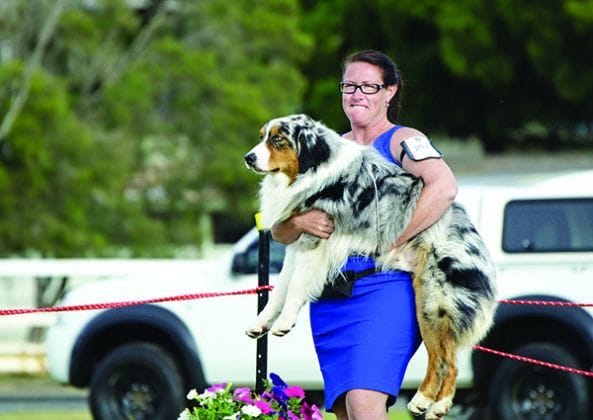
When picking up or moving a large dog, do not grab the dog by his chest. Support his weight with an arm around his rear end.
Read the entire article HERE!
Dr. Neely North, DVM, CVA, CVFT, CVMMP
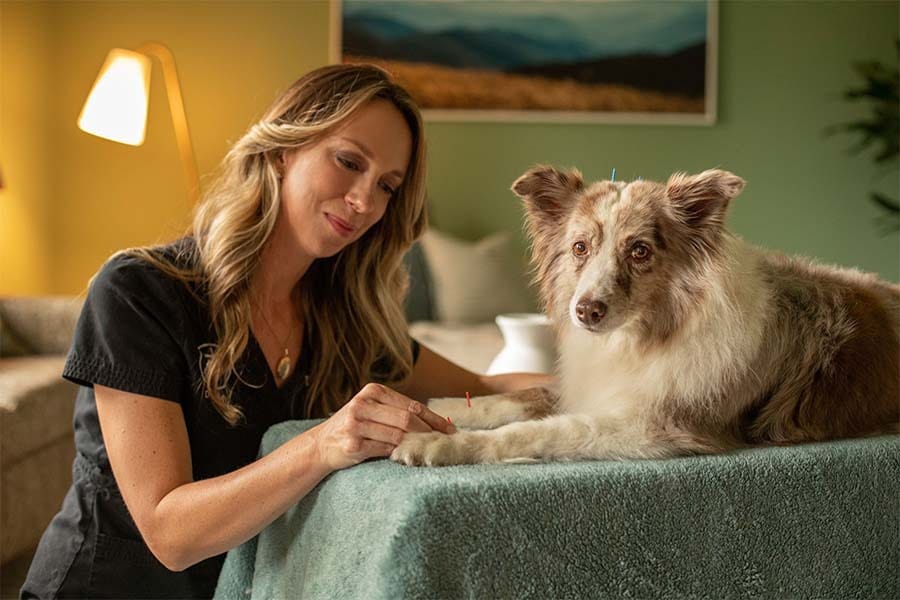
Dr. North understands and values the difference between surviving and thriving. Her whole-body approach will lead your pet to their best and longest life. Using human-grade whole foods, supplements, Chinese herbs, and more, Dr. North’s goal is to manage your pet’s medical conditions with as little conventional drug intervention as possible. Through your virtual or in-person consultation, you will gain an understanding of your pet’s Traditional Chinese Veterinary Medicine diagnosis, Western veterinary medicine diagnosis, lab work details, and more. Clients leave feeling heard and with a plan for herbs, supplements, foods, and even a home-cooked recipe (topper or full diet) using foods that benefit their pet’s specific conditions.
Listen wherever you stream your podcast or click here.